
Mennonite vs Amish: What’s the Difference

If you have ever driven through the rolling hills of Lancaster County, Pennsylvania, you have likely experienced a beautiful sort of time travel.
One minute you are passing an electric vehicle; the next, you are slowing down for a traditional horse-and-buggy.
This is the heart of Pennsylvania Dutch country, a region where deep-seated traditions thrive alongside the modern world.
While both groups are famous for their peaceful lifestyles, tight-knit communities, and incredible woodworking, they are not the same.
To understand the differences between Mennonite and Amish communities, we have to look at their history, their faith, and how they navigate daily life in the 21st century.
The Shared Roots
To understand the core differences between the Amish vs Mennonite lifestyles, we have to look back to 16th-century Europe during the Protestant Reformation.
Both groups emerged from the Anabaptist movement, a group of believers who rejected infant baptism in favor of conscious, adult baptism.
They sought a return to a simpler, more literal interpretation of the Bible, emphasizing peace, non-resistance, and a close community.

The split occurred in 1693. A Swiss Anabaptist leader named Jakob Ammann felt that the mainstream Mennonites (named after leader Menno Simons) were becoming too worldly. He advocated for stricter church discipline, including the shunning of suspended members.
Those who followed Ammann became known as the Amish, while those who remained became known as the Mennonites.
Facing severe persecution in Europe, both groups eventually migrated to North America, finding a haven of religious freedom in the early United States.
Amish vs. Mennonite Core Differences
While they share a spiritual foundation, their execution of faith in daily life looks vastly different today. Here is how the two groups compare across the major pillars of modern living.
1. Technology and Modern Conveniences
The most obvious divider between the two groups is their relationship with technology.
- The Amish: Belonging largely to the Old Order, the Amish people intentionally limit technology to preserve the family structure and prevent the outside world from fracturing their community. They do not connect their homes to the public electrical grid, do not own automobiles, and generally avoid cell phones or the internet in their homes.
- The Mennonites: The vast majority of Mennonites in North America embrace modern technology. They drive cars, utilize electricity, own smartphones, browse the internet, and live in contemporary homes.
2. Dress and Daily Life
If you are wondering how to tell who is Amish versus who is Mennonite apart on a practical level, clothing and appearance are your best clues.
| Feature | Old Order Amish | Modern Mennonites |
| Transportation | Horse-and-buggy exclusively. | Modern cars and trucks. |
| Women’s Appearance | Plain, solid-colored dresses, long aprons, and a distinct head covering (prayer kappe). | Varies widely. Can range from modest modern clothing to traditional dresses, often without a compulsory head covering. |
| Men’s Appearance | Married men grow long beards (without mustaches) and wear straw or felt hats. | Clean-shaven or typical modern facial hair; standard modern clothing. |
| Gender Roles | Uphold traditional, conservative gender roles centered around the home, farm, and trade shops. | More flexible, modern approach to career and family dynamics. |
3. Education and Global Outreach
How these two cultures approach learning and community expansion further highlights their differing philosophies.
The Amish stop formal education after the 8th grade. Their schools focus on practical math, reading, and writing, skills necessary to run a farm, manage a household, or master a trade.
They do not participate in global missionary work, choosing instead to let their quiet, faithful lives serve as their witness.
Conversely, Mennonites highly value higher education. It is incredibly common for Mennonites to attend universities, become doctors, lawyers, or engineers, and run expansive businesses.
They are also globally minded, frequently traveling the world to engage in extensive humanitarian aid and missionary work.
The Common Thread: Uncompromising Integrity and Craftsmanship

Despite the differences in whether they drive a car or a buggy, use smartphones, or go to college, the Amish and Mennonites share a core cultural trait that has made Amish Country famous worldwide: an absolute dedication to exceptional craftsmanship
In both cultures, work is viewed as an extension of faith. Shortcuts are not tolerated. Mass production and cheap materials fly in the face of their commitment to honesty and stewardship.
When something is built in Lancaster County, it is constructed with the expectation that it will outlast the person who bought it.
This cultural dedication to building things the right way, with patience, premium lumber, and generational expertise, is exactly what we call the Amish difference.
Timeless Heritage into Your Modern Backyard
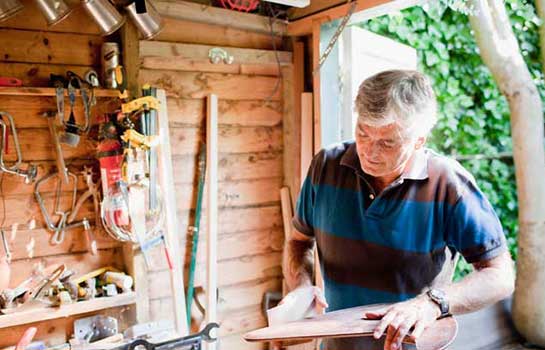
We live in a fast-paced, disposable culture. Appliances break in a few years, furniture is made of cheap particleboard, and backyard structures often warp or lean after just one harsh winter.
Learning about the Amish vs Mennonite way of life reminds us of the value of slowing down and investing in things that endure.
You don’t have to give up your smartphone or trade your car for a horse and buggy to appreciate the peace of mind that comes from true quality.
You can bring that exact spirit of intentionality, beauty, and durability into your own lifestyle:
- A Quiet Retreat: Imagine a beautifully designed custom studio shed in your backyard—a place free from the noise of the main house where you can focus, create, or relax.
- Functional Storage: Replace a flimsy, store-bought plastic shed with an heirloom-quality wooden garage or storage structure designed to match the architectural beauty of your home.
- Outdoor Gathering Spaces: A custom pool house or pavilion can transform your yard into a sanctuary for family and community, echoing the very values that keep Lancaster County so vibrant.
At Lapp Structures, our history is deeply intertwined with this local heritage.
We combine the timeless, honest manufacturing principles of our community with modern design innovations to create spaces that elevate your daily life.
Experience the Difference Firsthand
Whether you prefer the strict tradition of the Amish or the modern integration of the Mennonites, there is no denying the unparalleled quality that comes out of Lancaster County.
If you are ready to stop relying on temporary solutions and start investing in a structure built on integrity, we are here to help.
You can learn more about Lapp Structures and our deep local roots, or start dreaming up your own perfect space by exploring our completely customizable options.