
Who Are the Amish? History, Beliefs, and Traditions

In a world driven by smartphones, instant gratification, and a non-stop news cycle, walking into Lancaster County, Pennsylvania, can feel like stepping through a portal through time.
The rhythmic clip-clop of horse-drawn buggies, the sight of rolling green fields tended by hand, and the simple, timeless clothing offer a stark contrast to modern American life.
But who are the Amish, and what drives this community to live so deliberately apart from the rest of the world?
To truly understand who the Amish people are, we have to look past the postcards and tourist shops.
Their lifestyle isn’t a marketing gimmick or a rejection of comfort for its own sake; it is a deeply rooted belief system centered on faith, community, humility, and family.
At Lapp Structures, this heritage is close to our hearts. It shapes our community, our values, and the very way we work.
If you are curious, you can read a bit of our history to see how these roots intertwine with our daily operations.
The Roots of the Pennsylvania Dutch

The story of the Amish begins in Europe during the late 17th century. They emerged as a distinct group during the Anabaptist movement, led by a Swiss minister named Jakob Ammann.
Ammann believed the mainstream church had compromised its values and advocated for a stricter adherence to the teachings of the Bible, pacifism, and a literal separation from secular society.
Facing intense religious persecution in Europe, many Anabaptist groups fled across the Atlantic.
They found a haven of religious freedom in the United States, specifically in William Penn’s experiment: Pennsylvania.
Over the decades, these settlers became known as the Pennsylvania Dutch (a mispronunciation of Deutsch, meaning German).
Through major historical shifts—including the dawn of the industrial age and the global upheavals of the World War eras—the Amish steadfastly protected their isolation, holding tight to their pacifist principles and traditional ways of living while the world modernized around them.
Faith, Family, and the Ordnung
At the center of Amish life is the Ordnung—an unwritten set of rules and expectations that governs daily conduct for each specific church district.
The Ordnung outlines everything from the style of clothing a person wears to the types of tools permitted in agriculture and business.

Their religious beliefs are lived out rather than merely preached. This faith manifests in several distinct cultural traditions:
- Community Interdependence: The Amish consciously choose to bypass government programs. They do not pay into or collect Social Security, preferring to take full financial and physical responsibility for their own elderly, sick, and vulnerable community members.
- Practical Education: Amish children attend one-room schoolhouses run by the community. Formal schooling concludes after the eighth grade, at which point young people transition into structured, hands-on vocational training, learning agriculture, homemaking, carpentry, and trade skills.
- Home-Centric Worship: You won’t find traditional Amish church buildings. Instead, the congregation rotates bi-weekly, meeting inside individual members’ homes or barns. This reinforces the idea that the “church” is the people, not a structure.
“The Amish lifestyle isn’t built on legalistic restrictions; it’s a deliberate, protective shield designed to guard family harmony and community unity from the fracturing pressures of the outside world.”
How the Amish Use Technology & Navigate the Modern World
One of the most common misconceptions about the Amish is that they believe modern technology is inherently evil. This isn’t quite the case.
Instead of blindly adopting every new gadget, the community evaluates new technology through a simple lens: Will this innovation bring our families closer together, or will it pull us apart?
As a result, you will often see a highly strategic adoption of modern tools. For example:
- Power and Electricity: While homes are kept off the public electrical grid to prevent television and internet distractions from fracturing family time, many Amish businesses utilize compressed air, solar power, or diesel generators to run machinery.
- Communication: Public telephones are often kept in small shacks at the end of lanes for emergency or business use. In recent years, some business owners use cell phones strictly for commercial logistics, keeping them out of the living room to preserve the sanctity of the home.
- Transportation: Horses and buggies remain the standard for personal travel to keep life local and grounded. However, hiring a driver (usually a non-Amish neighbor with a van or car) is perfectly acceptable for long-distance business trips or family visits.
What is the Difference between Mennonite vs. Amish?
When exploring Pennsylvania Dutch country, visitors frequently wonder about the nuances of Mennonite vs. Amish traditions.
While both share a common European Anabaptist heritage, peace-loving theology, and a commitment to simple living, their paths diverged over how strictly to separate from the modern world.
Quick Comparison: Amish and Mennonites
| Cultural Feature | The Amish (Old Order) | Mennonites (General/Moderate) |
| Daily Transportation | Horse and buggy | Modern automobiles and trucks |
| Technology Use | Highly restricted; off the public grid | Generally accept internet, computers, and smartphones |
| Worship Spaces | Private homes and barns | Dedicated church buildings |
| Attire | Very strict, plain dress (hooks & eyes instead of buttons) | Modest, contemporary clothing or simplified plain dress |
The Heritage and Value of Amish Craftsmanship
Because vocational training begins right after the eighth grade, young craftsmen spend decades honing their skills under the watchful eyes of master builders.
In the Amish community, work is an expression of stewardship, honesty, and integrity. When a structure is built, it is built to last for generations.
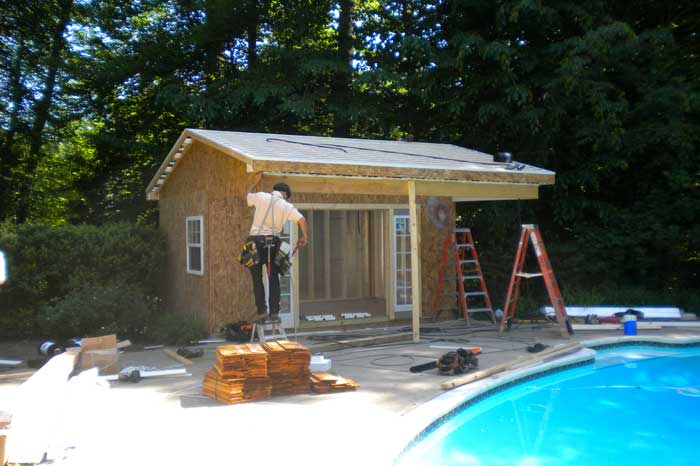
This unparalleled dedication to quality is exactly what we champion at Lapp Structures. We believe that your backyard should be an extension of your home, a place of beauty, order, and utility.
When you invest in an authentic, built-to-order structure, you aren’t just buying wood, shingles, and nails. You are bringing a piece of that quiet, time-tested Pennsylvania heritage into your daily life.
- See the Integrity Firsthand: Curious about what sets these structures apart from mass-produced plastic sheds? Explore the Amish difference to see how premium materials and heritage techniques merge.
- Built to Endure: From heavy-duty floor joists to reinforced roof trusses, get a behind-the-scenes look at the meticulous construction of Amish-built sheds.
- Inspiration for Your Space: Whether you need a quiet home office, a potting shed, or a durable garage, browse our stunning photo gallery to find the perfect style for your property.
Bring Time-Tested Traditions Home
The Amish lifestyle reminds us all that there is immense value in slowing down, focusing on family, and doing a job right the first time. You don’t have to give up your smartphone to appreciate the enduring value of honest, old-world craftsmanship.
Whether you need a simple storage solution or a beautiful custom building engineered directly on your property, we are here to help.
Discover how our dedicated teams handle the heavy lifting by reading about how we build a barn on site.
Ready to transform your backyard with a structure built on a foundation of integrity?